
Haven’t Filed Taxes in 3 Years?
Consequences & Options When You Haven’t Filed in 3 Years
What Happens if You Don’t File Taxes for 3 Years?
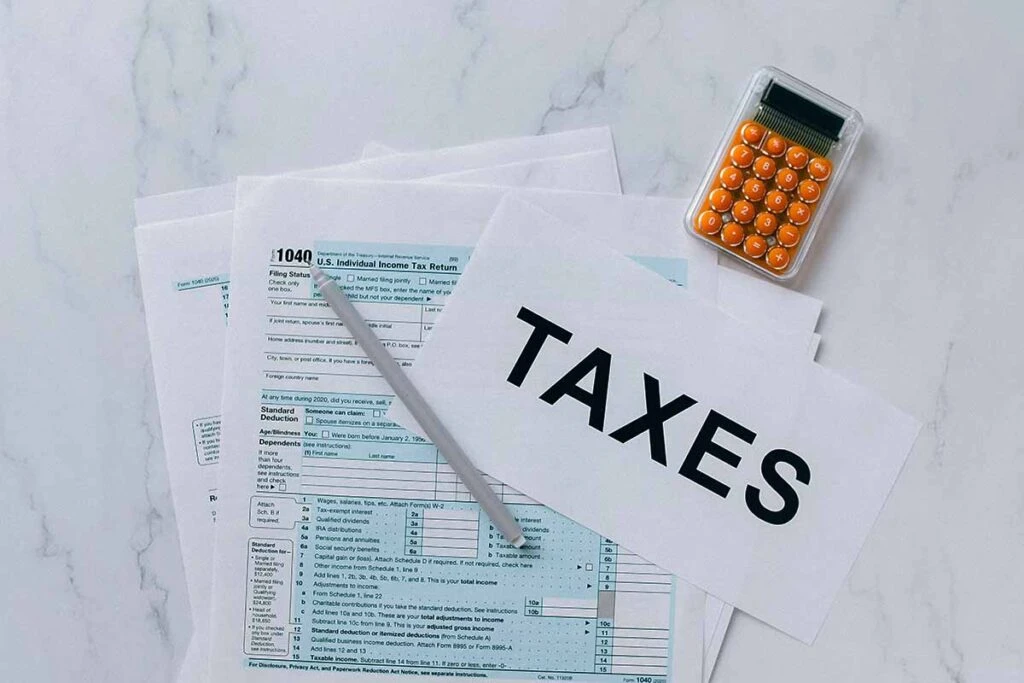
If you haven’t filed taxes in three years, you can lose the chance to claim a tax refund. Additionally, the Internal Revenue Service may file a tax return (called a substitute for return or SFR) on your behalf, allowing the agency to try to collect the tax bill.
Catching up on unfiled returns can seem daunting, but ignoring the situation can lead to serious trouble. To get help right away, contact us at the W Tax Group today. We can help you get caught up on filing taxes, and if you owe a tax liability, we’ll help you make arrangements with the IRS.
What to do in the next 30 minutes:
- Confirm which tax years are missing
- Pull your IRS transcripts for reported wage and income information
- Gather info on deductions and credits
- File the oldest year first if the refund cutoff is near
- Don’t wait to file; even if you can’t pay in full, you can stop the failure-to-file penalty from continuing to accrue
Key takeaways
- You have three years from the original filing deadline to claim a tax refund.
- If you file late and owe tax, you will incur penalties.
- A tax professional can help you request penalty relief and payment relief on the tax owed.
- The IRS may issue a Substitute for Return if you don’t file, often resulting in a much higher tax bill.
- If the IRS assesses tax against you, they can involuntarily collect through garnishments and seizures.
What to Expect If You Haven’t Done Taxes in 3 Years
The consequences of not filing vary based on whether you owe tax or the IRS owes you a refund. If you don’t file by three years after the deadline, you forfeit your chance to claim a refund – every year, taxpayers leave millions of dollars of unclaimed refunds on the table.
If you owe tax, you risk the IRS issuing a substitute for return and assessing tax against you. Additionally, you may face personal financial consequences, such as trouble securing a loan. Here is an overview of what to expect if you haven’t filed taxes in three years:
Refund expirations
You have three years from the original due date of the tax return to claim a refund for that tax year. For example, your 2025 tax return is due April 15, 2026, which means that you must file by April 15, 2029, if you want to claim a refund. As an added bonus, the IRS will add interest to your refund, back-dated to the original due date.
Penalties
If your tax return results in a tax liability, you will incur failure-to-pay and failure-to-file penalties on your account. These start to accrue the day you miss the filing deadline.
- The failure-to-file penalty is 5% per month or partial month the return remains unfiled. It is capped at 25% of the initial tax liability.
- The failure-to-pay penalty is 0.5% of the total balance due for each month or partial month the balance is unpaid, although it may increase to 1% per month when certain requirements are met. This is also capped at 25%.
These may both apply, and interest is charged on penalties as well as the initial balance.
Interest
The IRS will also add interest to the unpaid balance. Interest starts the day you are late, and it compounds daily until you pay.
Substitute for return
When you don’t file a tax return, the IRS can issue a substitute return on your behalf. If this shows that you owe a tax liability, the IRS can enforce collection actions against you.
Inability to prove income
If you don’t file taxes, you will not be able to prove your income to lenders, on the Free Application for Federal Student Aid (FAFSA), or for social assistance applications.
Risk of evasion charges
Not filing tax returns is not necessarily a crime, but if the IRS believes that you willfully failed to file in an attempt to evade taxes, you may face criminal charges. Failure to file is usually a misdemeanor but can be a felony in certain situations.
IRS notices about unfiled taxes
If you don’t file, the IRS will send you a notice telling you to file or let the agency know why you didn’t need to file. If you file a return showing a refund but didn’t file in previous years, the agency may send you a notice saying that it’s holding your refund until you prove that you didn’t need to file for those years.
The timing varies. For example, in 2024, the IRS sent out over 100,000 CP59 notices to high-income filers who hadn’t filed between 2017 and 2021. However, in other cases, taxpayers receive notices about their unfiled returns just a couple of months after the missed deadline.
What if I haven’t filed business taxes in three years?
If you have not filed business income tax returns, payroll returns, or other tax returns for your business, you will face penalties and interest. You also risk the IRS filing a return on your behalf and assessing taxes against you. Once the taxes are assessed, the IRS can take significant measures to collect them, including wage garnishments and asset seizures.
With payroll taxes and certain excise taxes in particular, the IRS may assess a Trust Fund Recovery Penalty. That is 100% of the unpaid tax, and it can be assessed against individuals, not just the business.
| Situation After Three Years | What Can Happen | What You Should Do Next |
|---|---|---|
| IRS owes you a refund | Missing the three-year window results in forfeiture of your refund | File as soon as possible, prioritizing returns that are close to the refund deadline |
| You owe tax | Penalties and interest accrue, and IRS can pursue collection | File even if you cannot pay in full, and then explore payment and relief options |
| IRS creates a Substitute for Return | SFRs exclude deductions, credits, and dependents, resulting in a higher tax bill. IRS may assess taxes and pursue collection. | Appeal by the deadline. File the correct tax return, including deductions, exemptions, and credits. |
| Missing documents | Delays filing and increases the risk that the IRS will move forward with an SFR | Pull IRS transcripts, request form duplicates where possible, and file |
| Business/payroll returns missing | Risk of SFR assessment and collections. Risk of personal liability if payroll taxes are unpaid | Talk to a tax professional and prioritize immediate payroll compliance |
Substitute Tax Return When You Haven’t Done Taxes in 3 Years
Failing to file your tax return can lead to the IRS issuing a Substitute for Return (SFR). An SFR is a tax return that the IRS generates using information received from third parties.
For instance, the IRS can generate a substitute tax return using W2 forms from employers, 1099-G forms that report unemployment or other government money, 1099-NEC forms from people who pay you as an independent contractor, and 1099-INT forms showing interest income from your bank.
Even if the IRS has the correct income information from you, substitute tax returns often show a much higher tax bill than you would incur if you had filed your own tax return. Here’s why:
- The IRS does not include voluntary deductions, exemptions, and tax credits on SFRs.
- SFRs are typically filed single or married filing separately, excluding the tax benefits you may get from filing married filing jointly or head of household.
- SFRs don’t include dependents, which can significantly increase your tax debt by eliminating the child tax credit and other dependent-related credits, such as education, childcare, and earned income credits.
- Substitute returns don’t include the business expenses a 1099 earner may have. As a result, you end up facing tax on your gross business income rather than on your net self-employment income.
If the SFR results in a balance owed, the IRS will send you CP3219N, Notice of Deficiency. This gives you 90 days to agree with the amount owed or challenge the proposed tax.
If you don’t agree with the SFR, you need to file your taxes for the years associated with the SFR. You must reach out to the IRS within 90 days of receiving the notice about the SFR. Otherwise, the tax assessment becomes final, and the IRS will start to collect the overdue taxes. The IRS may issue a federal tax lien, garnish your wages, levy the funds in your bank account, seize your assets, or take other actions to collect the back taxes.
How to Catch Up If You Haven’t Filed for Three Years
To catch up on your unfiled returns, start by gathering the information you need to file a tax return. You need the following information from each unfiled tax year:
- Income documents.
- Information about unearned income, such as investment income.
- Revenue and expenses from your business.
- Details on estimated tax payments.
- Receipts for medical bills, state and local taxes, charitable donations, and other deductions if you plan to itemize.
- Information about your dependents.
Depending on your situation, you may need additional tax documents to file, but your tax professional can let you know exactly what you need for each tax year based on your unique situation.
How to file if you are missing documents
You can contact payers directly to request old tax documents. For instance, if you don’t have a W2 wage statement, you can call your old employer and ask for one.
Alternatively, you can set up an online account on the IRS website to access wage and income transcripts. The online account shows the last 10 years of documents. You can apply through the mail using Form 4506-T (Request for Transcript of Tax Return) or have a tax pro obtain these documents for you.
Why You Should File Taxes as Soon as Possible
When someone calls us and says, “I haven’t done taxes in 3 years,” we usually advise them to file their tax returns as soon as possible. Generally, the only exception is in cases where the taxpayer didn’t need to file a tax return and isn’t going to claim a refund. Here are the reasons that you should file your taxes as soon as you can.
- To Claim Tax Refunds – If you haven’t filed for three years, you can still collect tax refunds on the last two years, and depending on the date, you may even be able to claim a tax refund on the return from three years ago.
- To Reduce the Failure-to-File Penalty – The failure-to-file penalty is 5% of the tax debt owed from your return, and the IRS assesses this penalty every month until you file. It can get up to 25% of your balance. The sooner you file, the sooner the IRS stops adding this penalty to your account.
- To Reduce the Failure-to-Pay Penalty – The failure-to-pay penalty isn’t one of the IRS’s most significant penalties, but it is 0.5% to 1% of the unpaid taxes owed every month. Once you file and pay your taxes, you don’t have to worry about this penalty anymore.
- To Avoid a Substitute for Return – It’s easier to file your returns proactively than to deal with an SFR. As explained above, SFRs are notorious for overstating your taxes owed, and once the IRS has used an SFR to assess tax, it can start collection actions against you.
- To Avoid Enforced Collection Actions – If the SFR shows that you owe a tax debt from your unfiled federal taxes, the agency can start collection actions. This can include federal tax liens, garnishments, levies, and more.
- To Get Into Compliance – The IRS will only allow you to set up monthly payments or apply for offers in compromise or other relief programs if you are compliant with filing obligations. Generally, that means that you need to file (or prove you aren’t required to file) returns for the last six years.
- So You Can Apply for Loans – In a lot of cases, lenders use tax returns to see your adjusted gross income. This is especially true if you are self-employed or applying for a mortgage. Once you file your old returns, you have proof of income that you can use when applying for loans.
The consequences can be even worse if you haven’t filed for 10 years or if you’re dealing with business taxes. However, the benefits of catching up can be even more compelling in these situations.
What If I Haven’t Filed Taxes in 3 Years and I Can’t Afford to Pay?
A lot of people think that if they can’t afford to pay taxes, there is no reason to file a tax return. This is absolutely not true. Even if you owe tax that you can’t afford to pay, you should still file. This helps you to minimize failure-to-file penalties. If you pay taxes late, the penalty is much lower than the penalty for failing to file.
Also, once you’ve filed taxes, you can work with a tax professional to set up a payment plan or apply for other IRS tax resolution options. Here are the options for paying taxes once you’ve filed a return:
- Payment plan — This allows you to pay your taxes in monthly installments.
- Offer in compromise — If you qualify, the IRS will let you pay off your tax bill for less than you owe.
- Partial payment plan — You make monthly payments until the collection statute expiration date. Then, the IRS waives the remaining balance.
- Currently uncollectible status — The IRS stops collection actions on your account if you can prove that you can’t afford to pay your taxes without suffering economic hardship.
Depending on the situation, you may also qualify for penalty abatement, innocent spouse relief, or other programs.
FAQs
Can I go to jail for not filing?
Criminal charges are reserved for cases involving tax fraud and evasion, not taxpayers who have simply fallen behind or are afraid to file because they cannot afford to pay. The IRS rarely pursues criminal charges for unfiled tax returns. Normally, the IRS deals with unfiled returns using civil failure to file penalties, and it saves criminal charges for situations involving willful attempts to evade taxes.
What if I haven’t filed state taxes for three years?
State revenue agencies all have their own rules and regulations for delinquent tax returns and unpaid taxes. However, in most states, if you file taxes late, you will incur a failure-to-file penalty based on the total unpaid taxes. In some states, you can even lose your professional license or have your business shut down for failure to file and pay taxes.
What if I haven’t paid taxes in three years?
If you have filed tax returns but haven’t paid in three years, you have a lot of options. However, you need to act quickly if you want to prevent the IRS from taking collection actions against you. When you contact a tax professional, they can talk with you about your tax debt and help you find the best resolution options for your situation.
How long can you go without filing taxes?
The amount of time you can fly under the IRS’s radar depends on the number and value of income documents the IRS receives in your name. It also varies depending on other issues – for example, the IRS paused many collection actions during the COVID pandemic.
Can you file taxes after three years?
Yes, you can file taxes for up to 10 years in the past and even further back in some cases. However, you will only be able to claim a refund for up to three years after the filing deadline.
What should you do if the IRS files a substitute return?
File your original tax return immediately to potentially lower your tax liability, as substitute returns do not include deductions, credits, or exemptions. If you agree with the amount due shown on the SFR, make arrangements to pay it as quickly as possible so that you avoid penalties.
How far back can the IRS require you to file taxes?
The IRS generally requires the last six years of returns to get back into compliance, but if substantial income was not reported, they may require you to file for more years.
Can you negotiate with the IRS if you owe for multiple years?
Yes, once you file your old returns, you can work with the IRS to set up payments or apply for settlements on the full balance due, even though the tax debt is from multiple years.
What’s the fastest way to get W-2/1099 information if I don’t have documents?
You can get this information via your tax transcript if the documents were submitted to the IRS, but in most cases, reaching out directly to the issuer of the form is quicker. Employers and clients keep tax documents on hand for at least four years to comply with IRS requirements. A tax pro can help you get these documents quickly.
Should I file the oldest year first or the most recent year first?
If you are owed a refund, you may want to start with the oldest year first if you are still within the three-year deadline. Otherwise, you may want to file years as you gain access to tax documents to avoid unnecessary delays.
What if I’m owed refunds for multiple years–what’s the deadline?
Each tax year has its own specific deadline–three years from the initial due date of the tax return in question.
Get Help With Unfiled Taxes
Worried about not filing your taxes for the last three years? Wondering about the consequences of not filing for other lengths of time? Want to get caught up and not sure where to start? Then, contact us today. We can help you resolve your tax problems.
Our tax attorneys can help you file your past-due tax returns. Then, we can help you work with the IRS or your state to create a plan to take care of your tax, penalty, and interest.

